Some meals simply make you slow down and enjoy the moment. Beef stew is one of them. Picture a pot filled with tender beef, chunky vegetables, fragrant herbs, and a thick, savory sauce. As it cooks, your kitchen fills with an aroma that makes everyone wonder when dinner will be ready.
Thank you for reading this post, don't forget to subscribe!You don’t need expensive ingredients to make a memorable stew. What matters most is how you prepare them. Give the beef a good sear, build the sauce gradually, and let everything cook slowly. The result is a hearty meal with tender meat and plenty of rich flavor.
If you’re looking for a reliable beef stew recipe for a family dinner, weekend meal, or make-ahead lunch, this version gives you a simple method you can easily adapt to your kitchen.
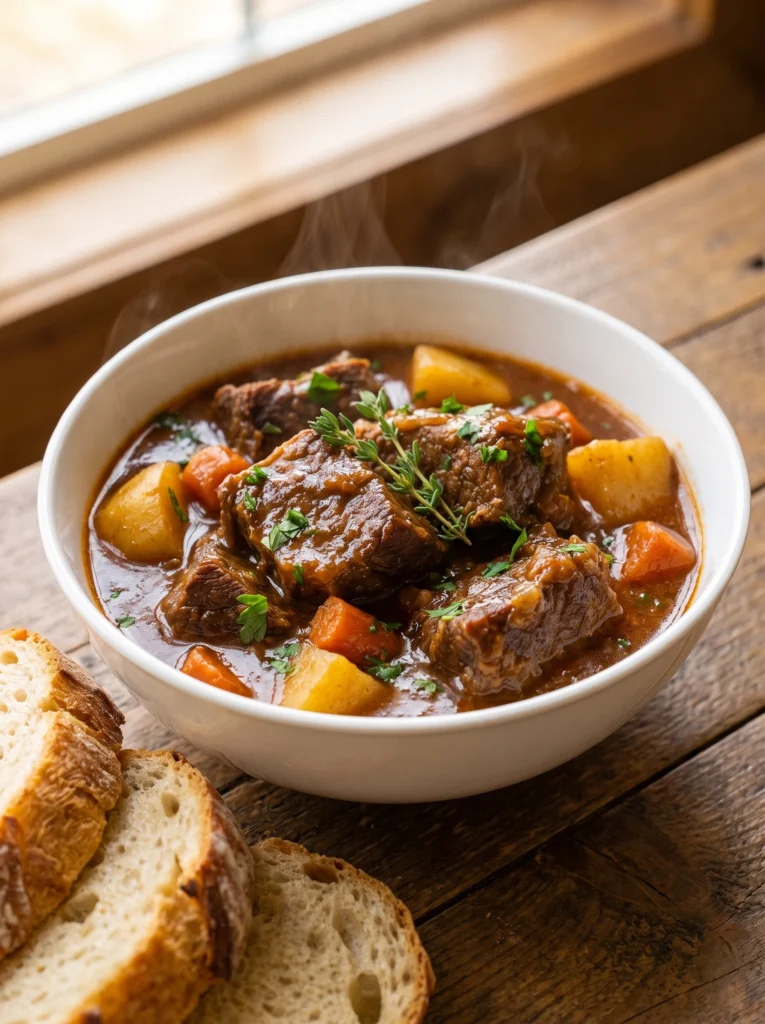
Table of Contents
Why You’ll Love This Beef Stew
A homemade stew has several advantages. You can adjust the seasoning, choose your favorite vegetables, and control how thick or brothy you want the finished dish to be.
This recipe gives you:
- Tender pieces of slow-cooked beef
- Soft potatoes and carrots
- A rich, savory sauce
- Familiar ingredients that are easy to find
- A filling one-pot dinner
- Leftovers that reheat well
The cooking process takes some time, but most of that time is hands-off. Once the pot is gently simmering, you can let the heat do the work.
Ingredients for Beef Stew
Here’s what you’ll need for approximately six servings.
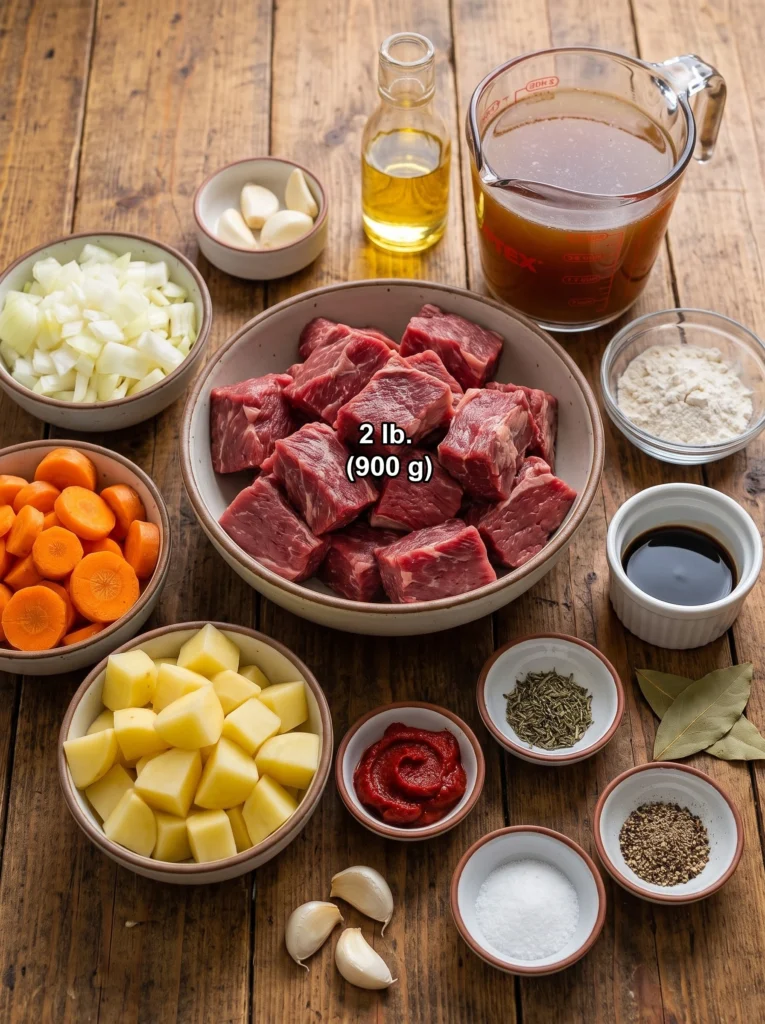
| Ingredient | Amount | Why You Need It |
| Beef chuck or stew beef | 2 lb (900 g) | Gives the stew its rich, meaty base |
| Onion | 1 large | Builds the savory foundation |
| Carrots | 3–4 | Adds sweetness and color |
| Potatoes | 3–4 medium | Makes the meal more substantial |
| Garlic | 3–4 cloves | Brings aromatic flavor |
| Tomato paste | 1–2 tbsp | Adds depth and richness |
| Beef broth | 3–4 cups | Creates the cooking liquid |
| Flour | 2–3 tbsp | Helps produce a thicker sauce |
| Worcestershire sauce | 1–2 tbsp | Adds savory complexity |
| Cooking oil | 1–2 tbsp | Used to sear the beef |
| Dried thyme | 1 tsp | Provides an earthy herbal note |
| Bay leaves | 1–2 | Adds subtle aroma |
| Salt | As needed | Balances the flavors |
| Black pepper | As needed | Adds seasoning and mild heat |
Which Beef Should You Use?
If you have a choice, beef chuck is an excellent option for stew. It contains connective tissue and fat that work well during slow cooking, helping the meat become tender and flavorful.
Pre-cut stew beef is another convenient choice. Try to select pieces that are reasonably similar in size. That way, you won’t end up with some pieces becoming tender long before others.
Very lean beef can be less forgiving in a long-cooked stew, so cuts intended for slow cooking are generally a better fit.
How to Make Beef Stew
Step 1: Cut and Season the Beef
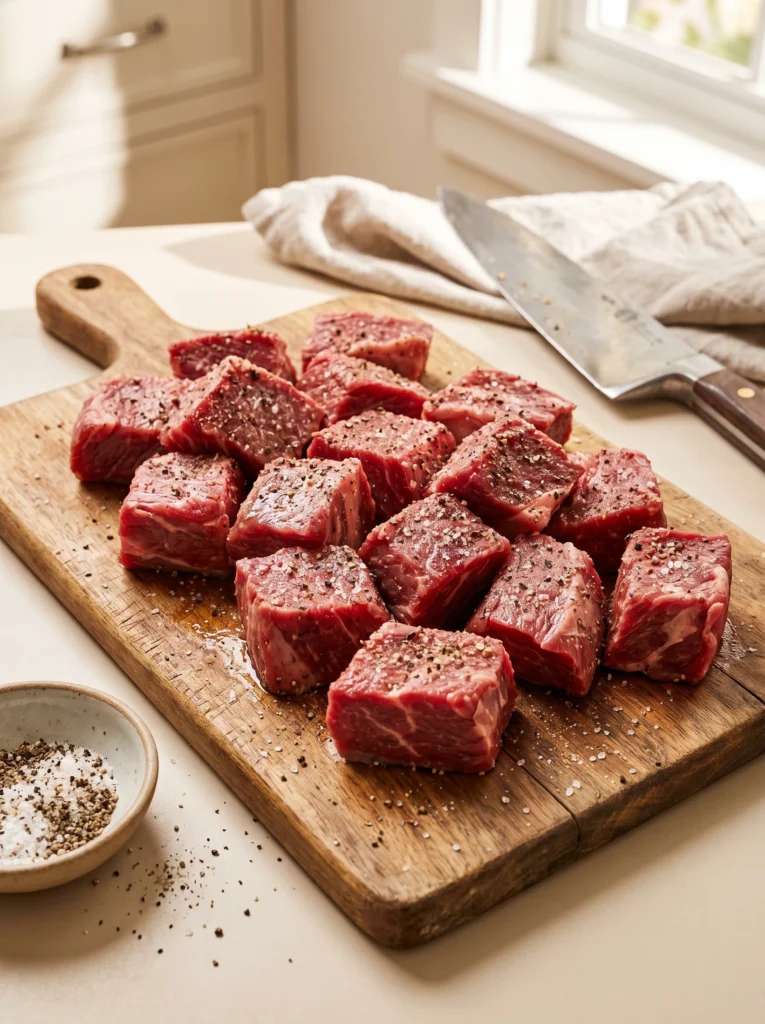
Cut the beef into bite-sized chunks, aiming for pieces that are roughly the same size.
Before putting the meat in the pot, pat it dry with paper towels. Season it with salt and black pepper.
This small preparation step matters because excess moisture can interfere with browning.
Step 2: Sear the Beef Until Golden Brown
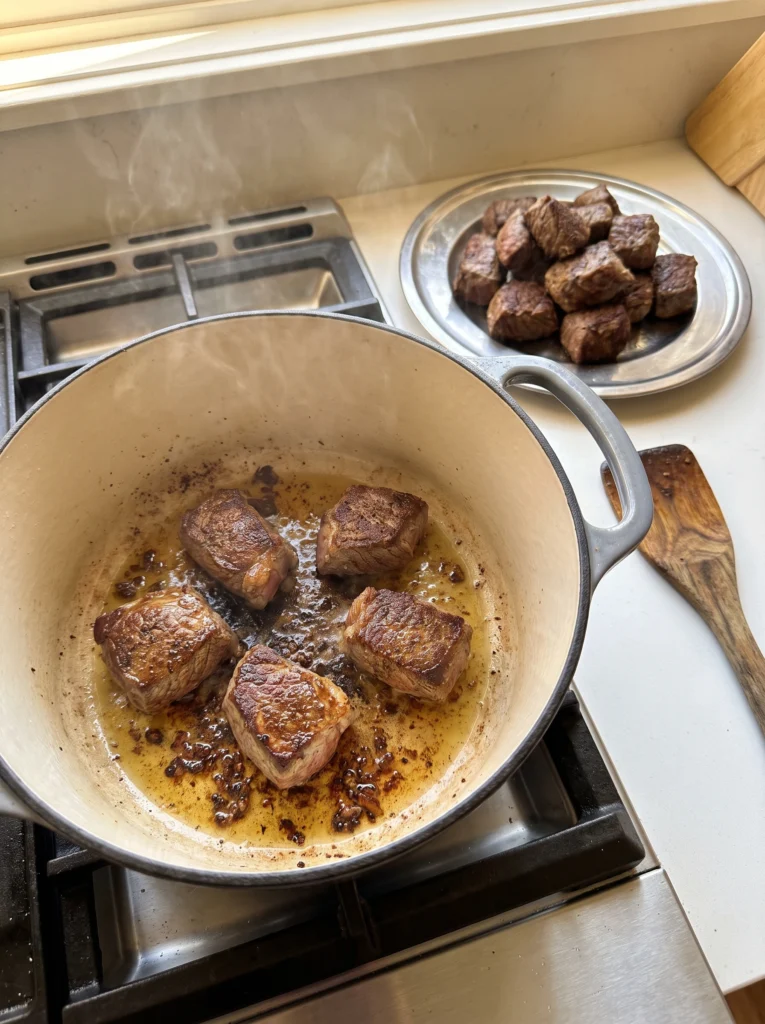
Place a large heavy pot over medium-high heat and add your oil.
Once the pot is hot, add a portion of the beef to begin searing. Don’t put all the meat in at once if it means crowding the bottom.
Let the pieces sit long enough to develop a brown surface. Turn them so several sides get good color.
You aren’t trying to cook the beef completely here. The aim is to develop a rich, flavorful brown crust on the outside of the beef.
Transfer the seared beef to a clean plate and continue with the remaining pieces.
Step 3: Start Building the Flavor Base
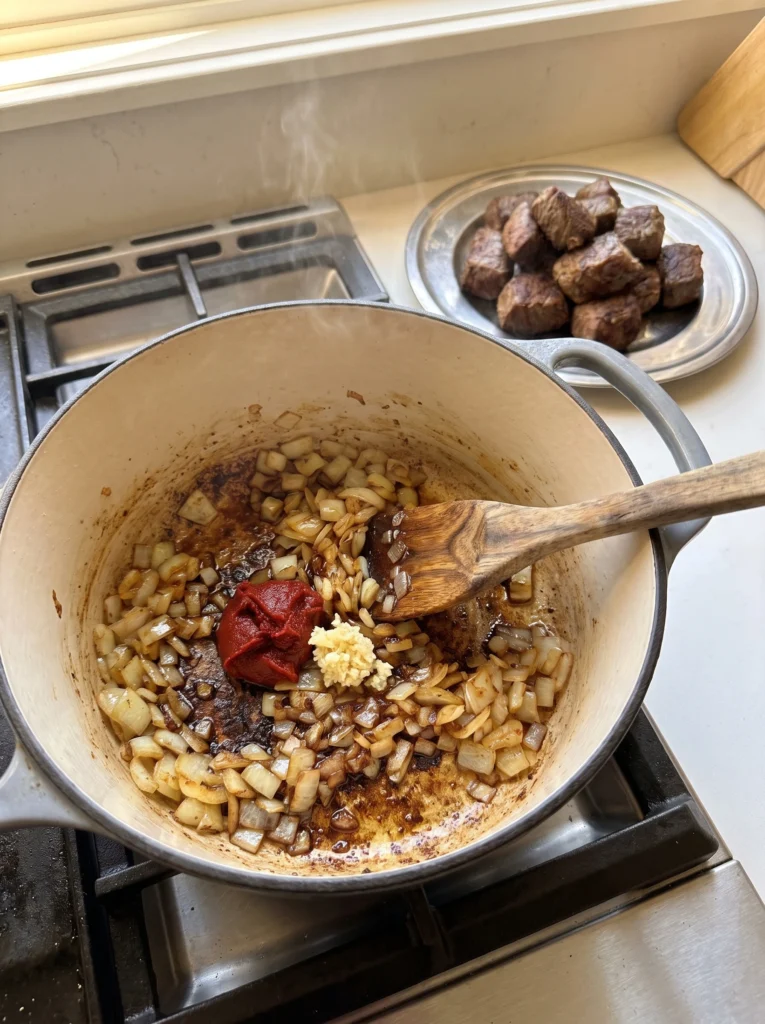
Turn the heat down slightly, then add the chopped onion to the same pot.
Stir the onion around, picking up some of the browned residue left behind by the beef. Once the onion starts becoming tender, add the garlic and stir it through.
Next, stir in the tomato paste.
Allow it to cook for a short time before adding the liquid, rather than pouring it in all at once.
This helps develop a deeper flavor in the base of your stew.
Step 4: Loosen the Flavorful Bits
Pour in some of your beef broth. Add the carrots and potatoes toward the end of the cooking process.
The browned pieces stuck there contain plenty of flavor, so you want them incorporated into the sauce rather than left behind.
Once the bottom is clean, add the remaining broth.
Step 5: Return the Beef and Simmer
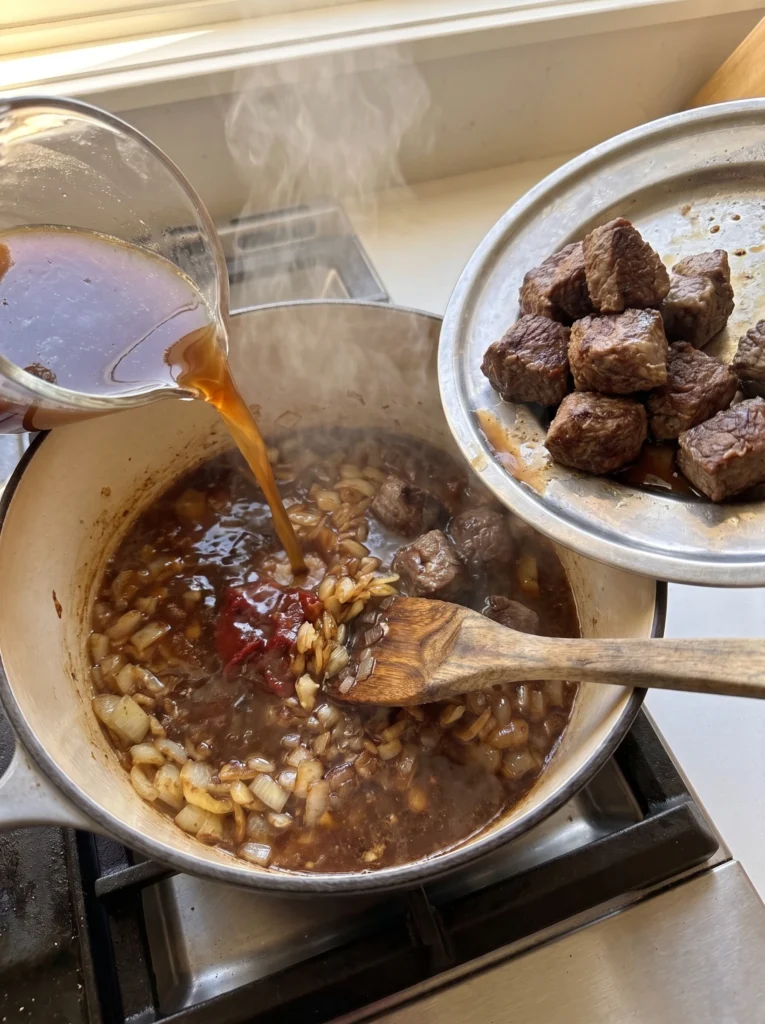
Put the browned beef back into the pot along with any juices that collected on the plate.
Add the thyme, bay leaves, and Worcestershire sauce.
Bring the liquid to a gentle simmer. Then reduce the heat and cover the pot.
This is where patience becomes important. A stew should cook gently rather than boil aggressively.
For pieces around 1 to 1½ inches, USDA guidance gives roughly 2–3 hours as a general simmering range for stew or cross-cut beef. Your actual time can vary depending on the cut, piece size, cookware, and heat level, so use tenderness as your main guide. USDA beef cooking guidance
Step 6: Add the Vegetables
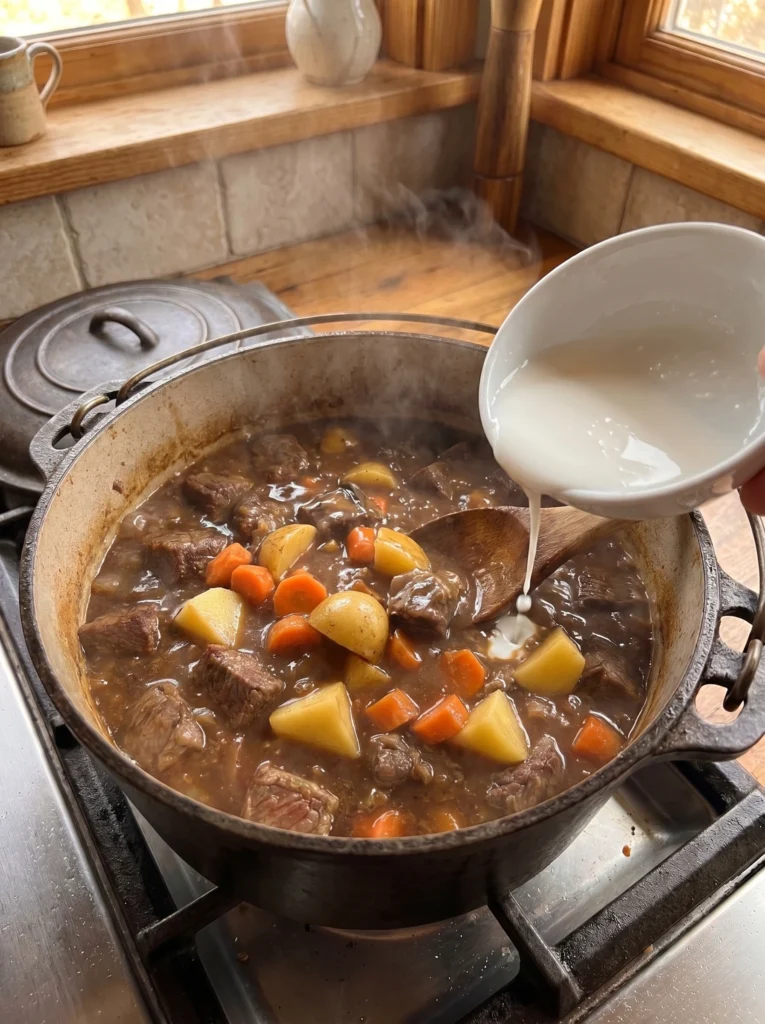
Add the carrots and potatoes toward the final stage of cooking.
If you put them in too early, they may become overly soft before the beef is ready.
Cutting them into moderately large pieces also helps them hold their shape while the stew finishes cooking.
You can add other vegetables if you like, including:
- Celery
- Mushrooms
- Peas
- Parsnips
- Turnips
Step 7: Adjust the Thickness
Your stew may already have a naturally thick sauce after simmering. If it looks too thin, you have several options.
You can let the pot simmer uncovered for a while so some liquid evaporates. Alternatively, make a small cornstarch slurry with cold water and gradually stir it into the hot stew.
If you’re using flour as part of your original recipe, make sure it is incorporated properly so you don’t end up with a floury taste or lumps.
Aim for a sauce that is thick enough to cling to the beef and vegetables without turning into paste.
Step 8: Taste Before Serving
Remove the bay leaves and taste the stew.
This is your opportunity to adjust:
- Salt
- Black pepper
- Worcestershire sauce
- Herbs
- Sauce consistency
A little chopped fresh parsley on top can add a pleasant fresh contrast to the rich stew.
How to Make Your Beef Stew Extra Tender
Tender meat isn’t achieved by one secret ingredient. Several small choices work together.
Choose a Slow-Cooking Cut
Chuck and other suitable stew cuts tend to perform well during extended moist cooking.
Don’t Skip the Sear
A browned exterior gives the finished dish more depth than simply simmering raw beef in broth.
Avoid Excessive Heat
A rapid boil can make the cooking process harsher than necessary. Keep the stew at a gentle simmer.
Give the Meat Time
If your beef is still chewy after the suggested cooking time, it may simply need longer. Check it periodically and continue cooking until it reaches the texture you want.
Why Is Your Beef Stew Tough?
There are several possible explanations if your beef isn’t tender.
The most common possibilities include:
- The meat hasn’t cooked long enough.
- The beef pieces are larger than expected.
- You selected a particularly lean cut.
- The stew has been cooked too aggressively.
- The cooking temperature has fluctuated.
- Your particular cut simply needs more time.
Don’t assume that a timer guarantees tenderness. When making stew, the texture of the meat is a more useful indicator than an exact cooking duration.
How to Make Thick and Flavorful Beef Stew Gravy
The sauce is just as important as the beef.
If your gravy is thin, try one of these approaches:
- Reduce it: Simmer the stew uncovered and allow excess liquid to evaporate.
- Use cornstarch: Combine cornstarch with cold water before adding it to the hot liquid.
- Use flour: Incorporate flour appropriately during preparation.
- Use the vegetables: Some potatoes naturally release starch as they cook, contributing to a thicker sauce.
Add thickener gradually. It’s much easier to make a stew thicker than to rescue one that has become excessively dense.
Easy Ways to Change This Beef Stew Recipe
One of the best things about homemade beef stew is its flexibility.
Slow Cooker Beef Stew
Brown the beef first if you have time, then transfer it to your slow cooker with the remaining ingredients.
Because slow cookers vary, follow your appliance’s instructions for temperature and timing.
Dutch Oven Beef Stew
A Dutch oven is particularly useful because you can brown the beef, cook the vegetables, and slowly simmer everything in the same pot.
It also makes it convenient to move the stew from the stovetop to the oven when your recipe requires it.
Beef Stew Without Wine
Wine isn’t essential. Beef broth combined with tomato paste, Worcestershire sauce, herbs, and well-browned meat can create a flavorful sauce without it.
Gluten-Free Beef Stew
If you need a gluten-free version, replace wheat flour with an appropriate gluten-free thickener. Check the labels on packaged broth and sauces as well, since formulations can differ between brands.
What Can You Serve With Beef Stew?
Because the stew already contains meat and vegetables, you don’t need an elaborate side dish.
Try serving it with:
- Warm crusty bread
- Soft dinner rolls
- Steamed rice
- Mashed potatoes
- Roasted vegetables
- A simple green salad
Bread is particularly useful because it gives you something to soak up every bit of the gravy.
Storing and Reheating Beef Stew
If you have leftovers, let food-safety guidance determine how you handle them rather than leaving the pot sitting out for hours.
USDA recommends refrigerating leftovers within two hours and keeping cooked soups and stews refrigerated for approximately 3–4 days. For best quality, frozen soups and stews are generally recommended within 2–3 months. USDA food storage guidance
For convenient storage:
- Divide the stew into suitable containers.
- Refrigerate portions you plan to eat soon.
- Freeze portions you won’t need within the recommended refrigerated period.
- Label frozen containers with the date.
- Reheat leftovers thoroughly before eating.
USDA recommends reheating leftovers to 165°F (74°C). USDA leftovers guidance
Common Beef Stew Mistakes
Keep these mistakes in mind the next time you make stew:
- Crowding the pot: Brown the beef in batches when necessary.
- Skipping the sear: Browning helps develop a richer flavor.
- Boiling too hard: Keep the cooking gentle.
- Adding vegetables too early: Potatoes and carrots can become overly soft.
- Adding too much liquid: You can always add more later, but reducing an overly watery stew takes time.
- Under-seasoning: Taste before serving and adjust carefully.
- Stopping too soon: Tough beef often needs additional gentle cooking.
- Using inconsistent vegetable sizes: Similar-sized pieces cook more evenly.
Beef Stew Recipe FAQs
What Is the Best Beef for Beef Stew?
Beef chuck is a popular choice because it is well suited to long, moist cooking. You can also use commercially prepared stew beef for convenience.
How Long Does Beef Stew Take to Cook?
It depends on the beef, piece size, cooking temperature, and method. As a general reference, USDA gives approximately 2–3 hours for 1–1½-inch stew pieces cooked with liquid. Check the meat for tenderness instead of relying solely on the clock. USDA beef cooking guidance
How Do You Make Beef Stew Tender?
Use a suitable slow-cooking cut, brown it before simmering, maintain gentle heat, and give the beef enough time to soften.
Why Does My Beef Stew Taste Bland?
Check the seasoning first. Browning the beef, cooking the tomato paste briefly, using flavorful broth, and adding herbs can also give the stew more depth.
How Can You Thicken Beef Stew?
You can reduce the liquid, use a flour-based thickener, or add a cornstarch slurry. Add thickener gradually until you reach your preferred consistency.
Can You Make Beef Stew Ahead of Time?
Yes. Beef stew works well as a make-ahead meal. Once prepared, refrigerate or freeze it promptly using appropriate food-storage practices.
Can You Freeze Beef Stew?
Yes. Divide it into freezer-safe portions and freeze it for longer storage. USDA recommends using frozen cooked soups and stews within about 2–3 months for best quality. USDA refrigeration and freezing guidance
Final Thoughts
A satisfying beef stew recipe is less about complicated cooking and more about giving each ingredient the attention it needs.
Brown your beef instead of rushing it. Build the flavor base before adding the broth. Keep the heat gentle and give the meat enough time to become tender. Then add your vegetables at the right stage so they remain hearty rather than falling apart.
Once you understand those basics, you can make the recipe your own. Add mushrooms, change the herbs, adjust the thickness, or serve it with your favorite side.
Save this beef stew recipe for your next comfort-food dinner, share it with someone who enjoys homemade meals, and give yourself plenty of time for that first slow, flavorful simmer.