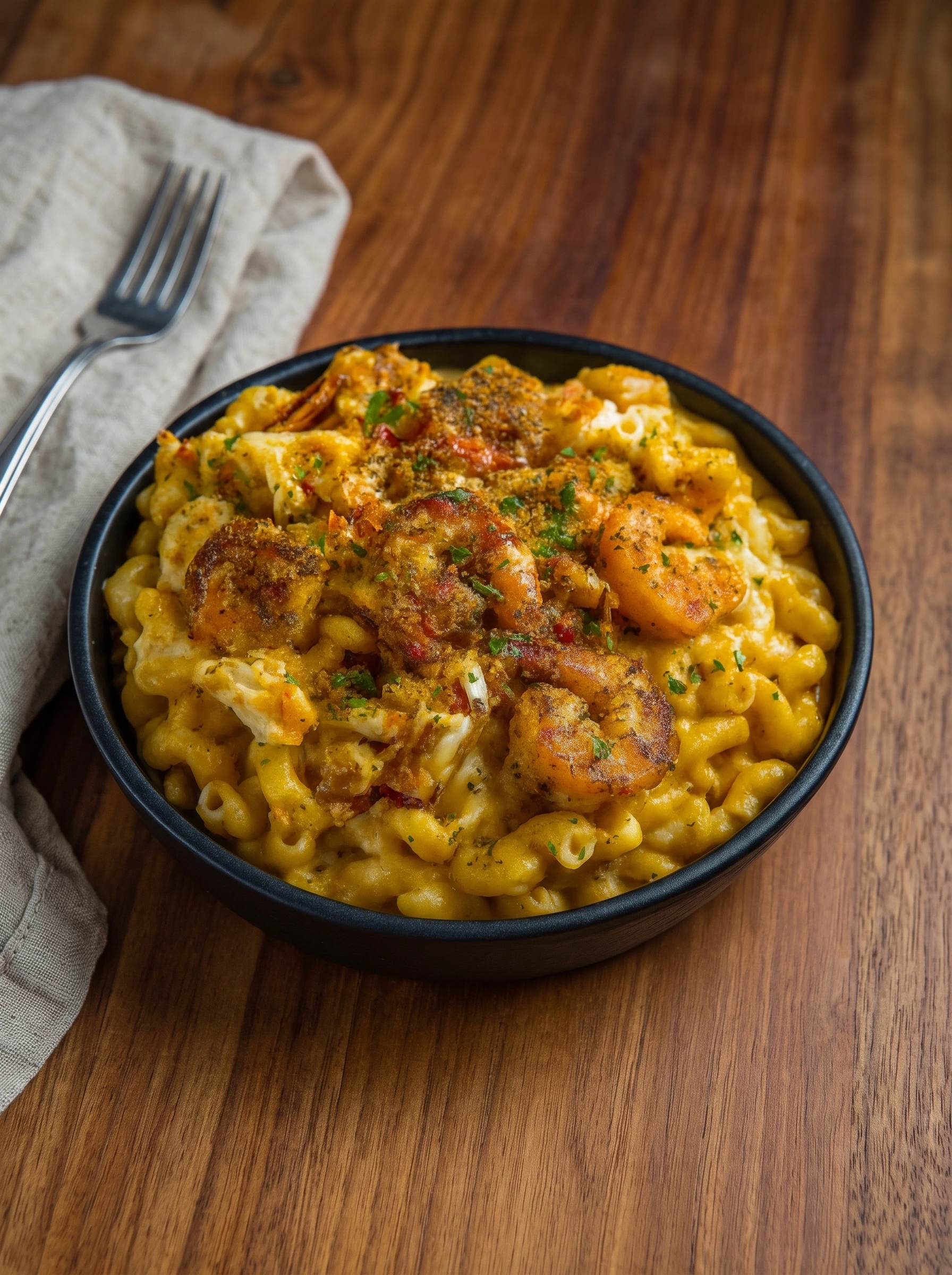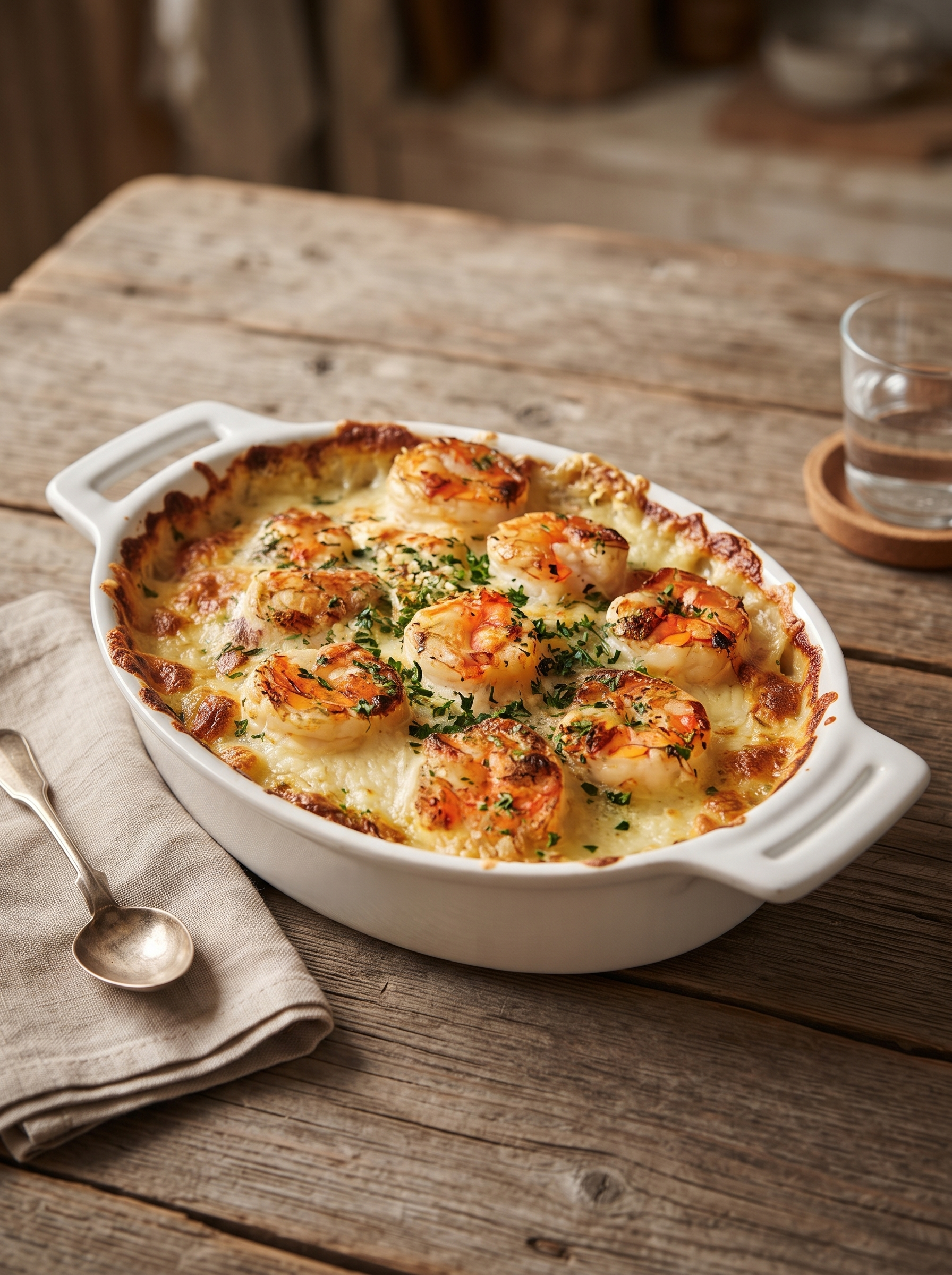
Some evenings call for a meal that feels comforting without requiring a lot of work. If you want something creamy, flavorful, and ready quickly, this Creamy Garlic Parmesan Shrimp recipe is worth adding to your dinner rotation.
Thank you for reading this post, don't forget to subscribe!You start with succulent shrimp and build the meal around a simple skillet sauce made with garlic, cream, Parmesan, and a few seasonings. The result is a rich, flavorful sauce that coats each shrimp perfectly.
You can serve it over pasta, spoon it onto rice, or pair it with warm bread for soaking up the extra sauce. Best of all, the whole dish can be on your table in about 20 minutes.
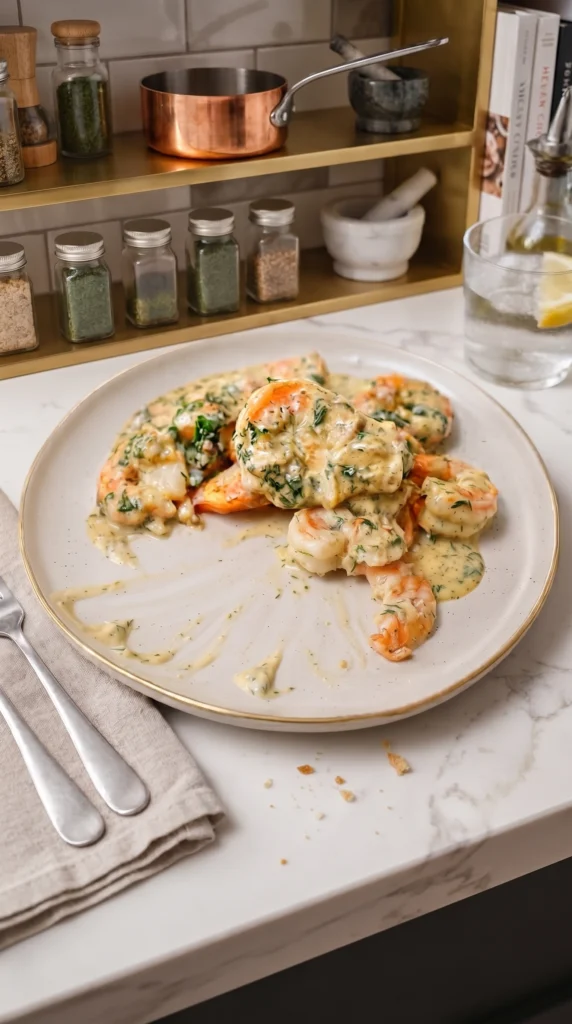
Table of Contents
Reasons to Love This Creamy Garlic Parmesan Shrimp
There are plenty of shrimp recipes you can make, but this one stands out because it combines convenience with plenty of flavor.
You won’t need a lengthy list of hard-to-find ingredients. Most of what you need may already be in your refrigerator or pantry.
Here are a few reasons you’ll want to give this recipe a try:
- It comes together in roughly 20 minutes from start to finish.
- Everything is prepared in one main skillet.
- The ingredients are easy to find.
- The sauce is creamy, indulgent, and full of delicious garlic flavor.
- You can pair it with a variety of different side dishes.
- It’s easy to customize with vegetables or extra spice.
The trick is to treat the shrimp gently. They cook quickly, so paying attention to timing makes a noticeable difference.
Ingredients for Creamy Garlic Parmesan Shrimp
Before you begin, prepare all your ingredients. Shrimp can go from perfectly cooked to overdone in a short time, so having everything ready makes cooking much easier.
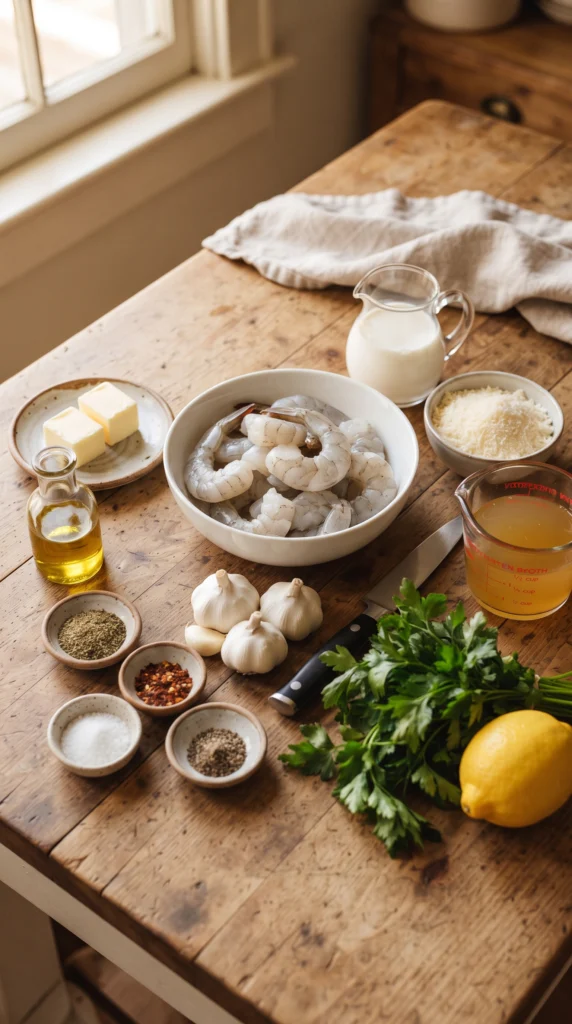
Ingredient List
| Ingredient | Amount | How It Helps the Recipe |
| Large shrimp | 1 lb | Provides the main protein |
| Unsalted butter | 2 tablespoons | Adds richness to the skillet |
| Olive oil | 1 tablespoon | Helps with sautéing |
| Fresh garlic | 4 cloves | Creates the main savory flavor |
| Heavy cream | 1 cup | Forms the creamy base |
| Fresh Parmesan | ½ cup | Thickens and flavors the sauce |
| Chicken or vegetable broth | ½ cup | Adds liquid and depth |
| Italian seasoning | 1 teaspoon | Brings herbal notes |
| Red pepper flakes | ¼ teaspoon | Optional heat |
| Salt | As needed | Balances the flavors |
| Black pepper | As needed | Adds mild spice |
| Fresh parsley | 2 tablespoons | Adds freshness |
| Lemon juice | 1 tablespoon | Balances the richness |
Which Shrimp Should You Buy?
Large shrimp are particularly convenient for this recipe because they’re substantial enough to remain juicy while you prepare the sauce.
Fresh shrimp are excellent, but frozen shrimp are also perfectly suitable. If you use frozen shrimp, thaw them completely before cooking and remove excess moisture with paper towels.
Peeled and deveined shrimp can save you additional preparation time.
Try to choose shrimp that are close in size. When they’re similar in size, they’ll cook more evenly.
Why Freshly Grated Parmesan Matters
For a smoother sauce, freshly grated Parmesan is an excellent choice.
Grating the cheese yourself allows it to blend more easily into the warm cream. It also adds a richer, more pronounced Parmesan flavor to the sauce.
You should also avoid adding the cheese while the pan is extremely hot. Gentle heat helps you achieve a creamier result.
How to Make Creamy Garlic Parmesan Shrimp
Once everything is prepared, the actual cooking process is straightforward.
1. Season the Shrimp
Add the shrimp to a bowl and lightly season them with salt, black pepper, and Italian seasoning.
You don’t need a heavy coating of seasoning because the Parmesan sauce will contribute plenty of flavor later.
Patting the shrimp dry before seasoning is also worthwhile. Excess moisture can interfere with browning.
2. Cook the Shrimp
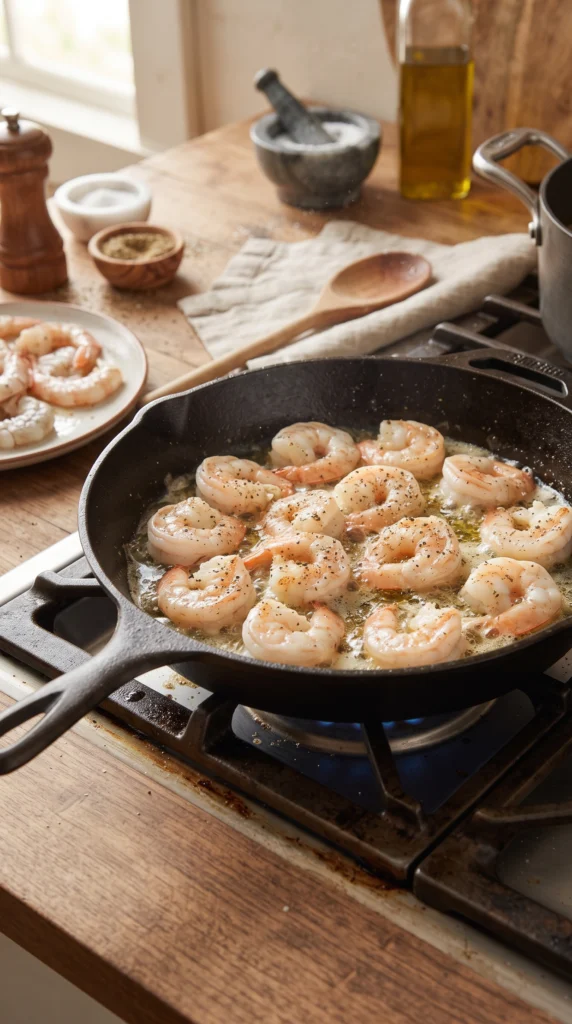
Place a large skillet over medium-high heat.
Add the butter and olive oil. Once the butter has melted, arrange the shrimp in the pan without piling them on top of one another.
Cook until the shrimp become opaque and develop some color, then turn them over and finish the other side.
Transfer the cooked shrimp to a plate.
Don’t worry about cooking them again at this stage. They’ll be added back to the skillet once the sauce is finished.
3. Cook the Garlic
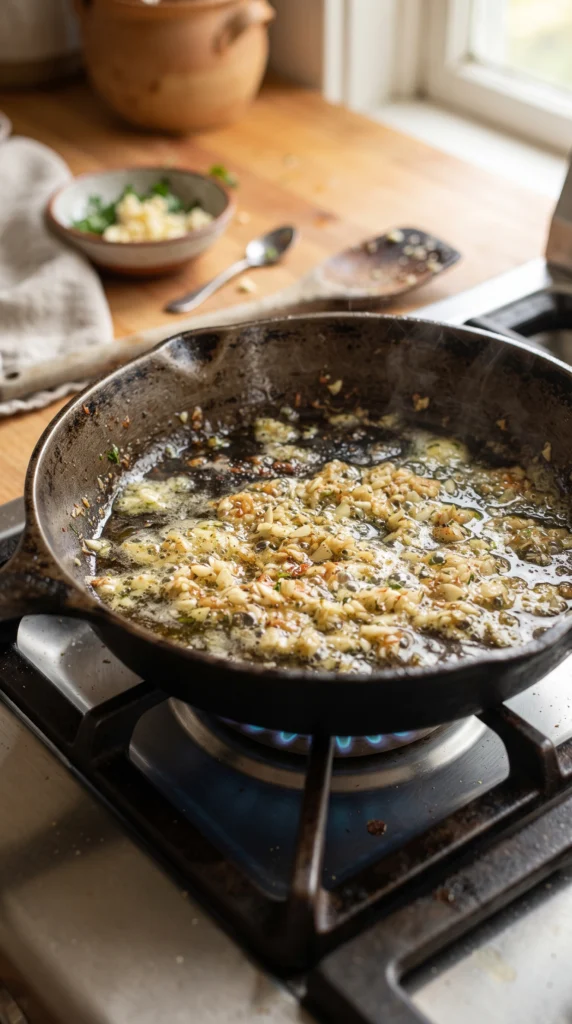
Lower the heat slightly.
Add the minced garlic to the same skillet, letting it cook in the remaining butter and flavorful browned bits from the shrimp.
Stir often and cook the garlic only until it becomes fragrant.
You don’t want dark, burnt garlic because it can give the entire sauce an unpleasant bitterness.
4. Build the Cream Sauce
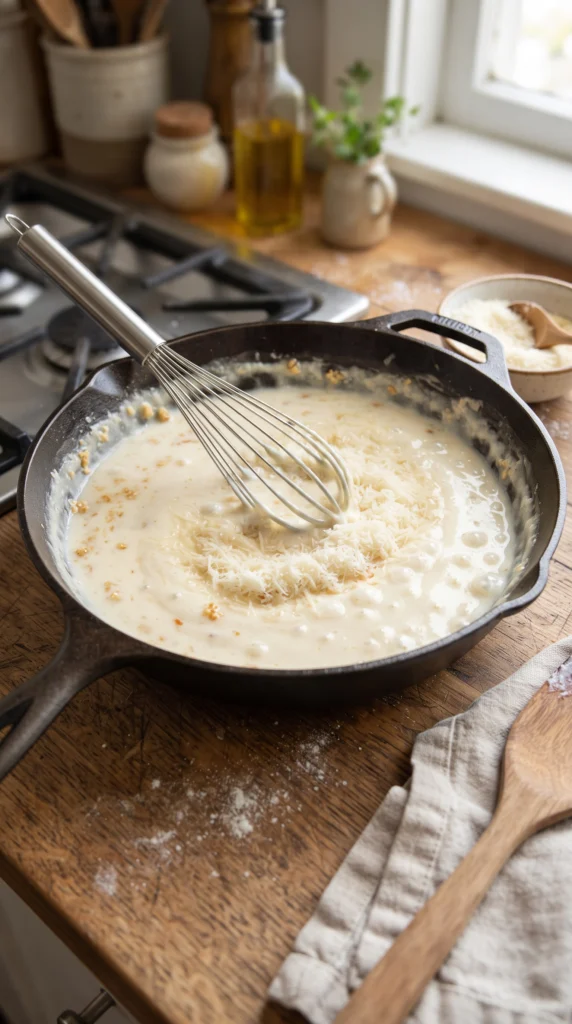
Pour the broth into the skillet, then gently scrape the bottom with a wooden spoon or spatula to loosen the flavorful bits.
Next, add the heavy cream.
Allow the mixture to warm and gently simmer. There’s no need to bring the sauce to a rapid boil.
Slowly add the grated Parmesan, stirring constantly as it melts into the sauce.
As the cheese melts, the liquid will become thicker and more velvety.
5. Bring Everything Together
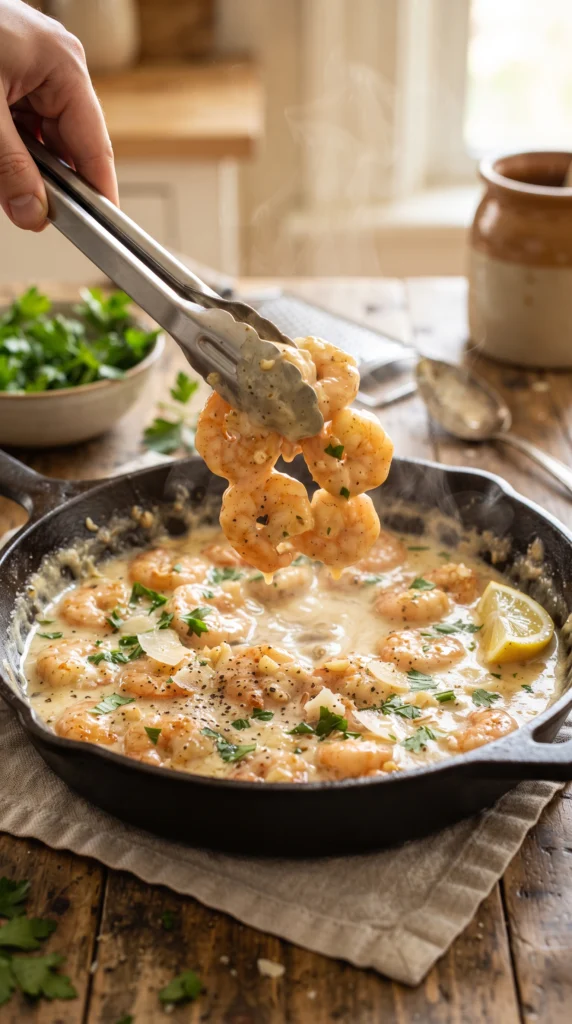
Return the shrimp to the skillet.
Spoon the sauce over them and allow them to warm through for a short time.
Finish the dish with chopped parsley and a squeeze of fresh lemon juice.
The lemon brings a fresh touch that helps balance the richness of the creamy cheese sauce.
How to Get the Best Texture
The ingredients are simple, but a few cooking habits can make a big difference.
Cook Shrimp Briefly
Shrimp don’t require extended cooking. Cooking them for too long can cause the shrimp to become tough and chewy.
For food safety, USDA guidance recommends cooking fish and shellfish to an internal temperature of 145°F (63°C). USDA Safe Minimum Internal Temperatures
Don’t Rush the Sauce
Once the cream and Parmesan are in the skillet, moderate heat is your friend.
A gentle simmer gives the ingredients time to combine without subjecting the dairy and cheese to unnecessarily high heat.
Taste Before Adding More Salt
Parmesan already contains salt, and the broth may contain additional sodium.
Taste the sauce near the end and adjust the seasoning only if necessary.
Easy Ways to Change the Recipe
Once you know the basic technique, you can create several variations without completely changing the recipe.
Creamy Garlic Parmesan Shrimp Pasta
This is one of the easiest ways to turn the skillet shrimp into a complete meal.
Cook your preferred pasta separately. Linguine, fettuccine, spaghetti, and penne all work well.
Toss the pasta with the Parmesan sauce and shrimp. If the mixture seems too thick, add a little reserved pasta water until the sauce reaches the consistency you like.
Spicy Creamy Shrimp
For a little extra heat, increase the amount of red pepper flakes.
You can add them while preparing the garlic so their flavor spreads throughout the sauce.
Shrimp With Spinach
Fresh spinach is an easy addition.
Add a few handfuls near the end and stir until the leaves wilt. The spinach adds color and gives the creamy sauce a fresh vegetable element.
Mushroom Garlic Parmesan Shrimp
Sliced mushrooms can be sautéed before preparing the sauce.
Allow them to develop some color before adding the garlic, cream, and broth.
Shrimp With Sun-Dried Tomatoes
Chopped sun-dried tomatoes add a concentrated sweet and tangy flavor.
They pair particularly well with garlic, Parmesan, and cream.
What Goes Well With Creamy Garlic Parmesan Shrimp?
You have plenty of options when deciding what to serve alongside your shrimp.
Simple Side Ideas
Try one or two of these:
- Warm garlic bread
- Crusty French bread
- Steamed broccoli
- Roasted asparagus
- Simple green salad
- Rice
- Mashed potatoes
- Roasted vegetables
If you’re serving the shrimp as the main dish, a fresh vegetable or salad can provide a nice contrast to the rich sauce.
Pasta Options
| Pasta | Best Feature |
| Linguine | Great for coating with creamy sauce |
| Fettuccine | Works especially well with rich sauces |
| Spaghetti | Easy and familiar |
| Penne | Holds sauce inside the tubes |
How to Store Leftover Shrimp
If you have leftovers, place them in a suitable airtight container and refrigerate them promptly.
According to USDA guidance, cooked leftovers should generally be consumed within 3 to 4 days when properly refrigerated. USDA Leftovers and Food Safety
For food safety, don’t leave perishable food at room temperature for extended periods. USDA recommends refrigerating leftovers within two hours. USDA Steps to Keep Food Safe
Reheating Instructions
Creamy shrimp is best reheated gently.
Place the desired portion in a skillet over low or medium-low heat. Stir occasionally and add a small splash of cream or broth if the sauce has become very thick.
When reheating leftovers, USDA guidance recommends heating them to 165°F (74°C). USDA Reheating Leftovers Safely
Try to reheat only what you’re planning to eat rather than repeatedly warming the entire batch.
Common Problems and How to Fix Them
The Shrimp Turned Out Tough
The shrimp were probably cooked for too long.
Next time, cook them only until properly done, remove them from the skillet, and return them to the sauce near the end.
The Garlic Tastes Bitter
Garlic that has been cooked too aggressively can become bitter.
Lower the heat and stir frequently. You want the garlic fragrant and lightly cooked rather than deeply browned.
The Sauce Is Too Thick
Add a small amount of broth or cream and stir.
Continue adding liquid gradually until you reach your preferred consistency.
The Sauce Is Too Thin
Allow it to simmer gently for a little longer.
You can also incorporate a little additional Parmesan while stirring.
The Sauce Doesn’t Taste Bright Enough
A small squeeze of lemon juice can make a noticeable difference. Add it gradually and taste as you go.
Frequently Asked Questions About Creamy Garlic Parmesan Shrimp
Can you make Creamy Garlic Parmesan Shrimp with frozen shrimp?
Yes. Frozen shrimp are convenient for this recipe. Thaw them properly and pat them dry before cooking.
Can you make this recipe without heavy cream?
Yes. You can use a lighter dairy option, although the resulting sauce may not be as thick or rich.
If you’re changing the dairy, keep an eye on the sauce while it cooks and adjust the consistency as needed.
What Parmesan should you use?
Freshly grated Parmesan is a good option because it blends smoothly into the warm sauce.
Can you turn Creamy Garlic Parmesan Shrimp into pasta?
Definitely. Prepare your favorite pasta separately and combine it with the finished sauce and shrimp.
Reserve some pasta water before draining. A small splash can help loosen the sauce if necessary.
How can you make the shrimp spicy?
Red pepper flakes are the easiest option. Start with a small amount and add more according to your preferred level of heat.
How can you thicken the Parmesan sauce?
Give the sauce a little more time to reduce over gentle heat. Additional Parmesan can also help increase its body.
What vegetables can you add?
Spinach, mushrooms, asparagus, broccoli, and sun-dried tomatoes are all useful additions.
Add vegetables according to their cooking time so they remain pleasant to eat rather than becoming overcooked.
Creamy Garlic Parmesan Shrimp Recipe at a Glance
| Recipe Detail | Information |
| Prep time | 5 minutes |
| Cooking time | 15 minutes |
| Total time | About 20 minutes |
| Servings | 4 |
| Main dish | Shrimp |
| Cooking method | Skillet |
| Primary flavor | Garlic Parmesan cream sauce |
Quick Method
- Dry and season the shrimp.
- Sauté the shrimp in butter and olive oil.
- Move the cooked shrimp to a plate.
- Cook the garlic briefly.
- Add broth and cream.
- Gradually mix in Parmesan.
- Return the shrimp to the skillet.
- Finish with parsley and lemon.
- Serve immediately with your favorite side.
Final Thoughts
This Creamy Garlic Parmesan Shrimp recipe gives you a practical way to put a restaurant-style dinner on the table without making the process complicated.
The combination of tender shrimp, aromatic garlic, Parmesan, and a creamy sauce is satisfying on its own, while the recipe also gives you plenty of room to experiment.
Try it with linguine for a hearty pasta dinner, add spinach for a vegetable-packed variation, or serve it with warm bread for an easy meal.
Tell Us What You Think ?
There are no reviews yet. Be the first one to write one.